冰与火之歌
A musical connection formed in 1985 continues through a new generation of Chinese and American students_我的网站

一 | 今年1月11日,小米“杂货店”迎来了一位新成员——米家高压锅。
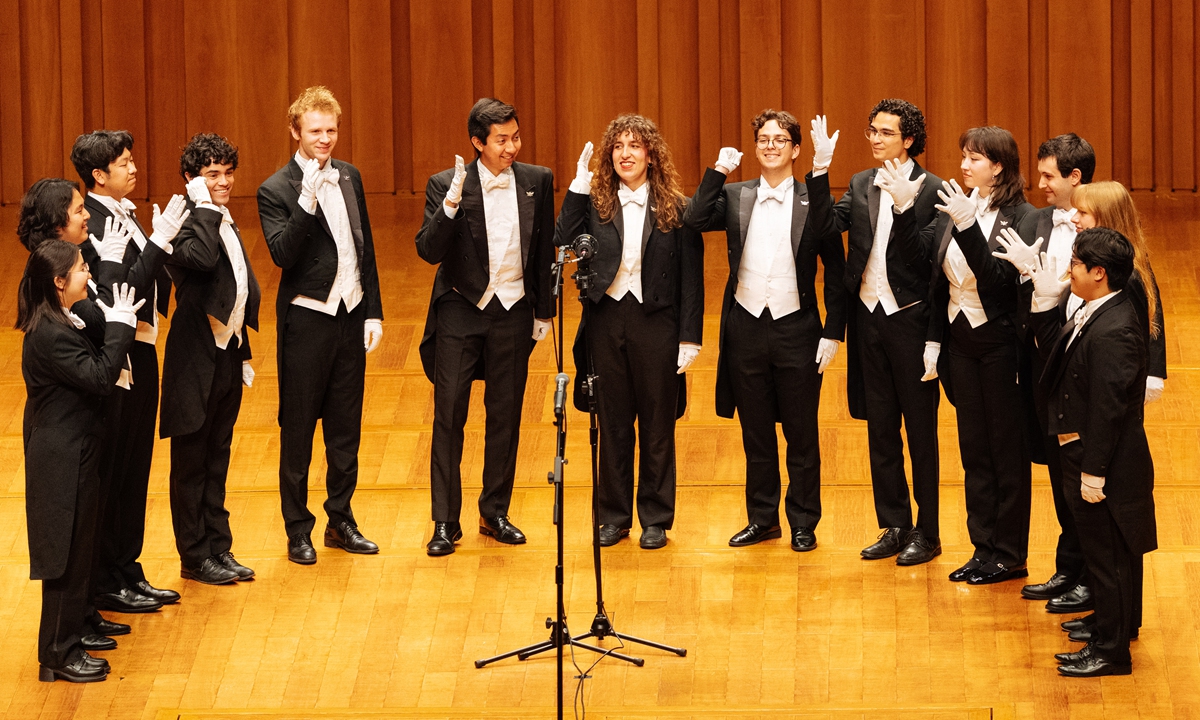
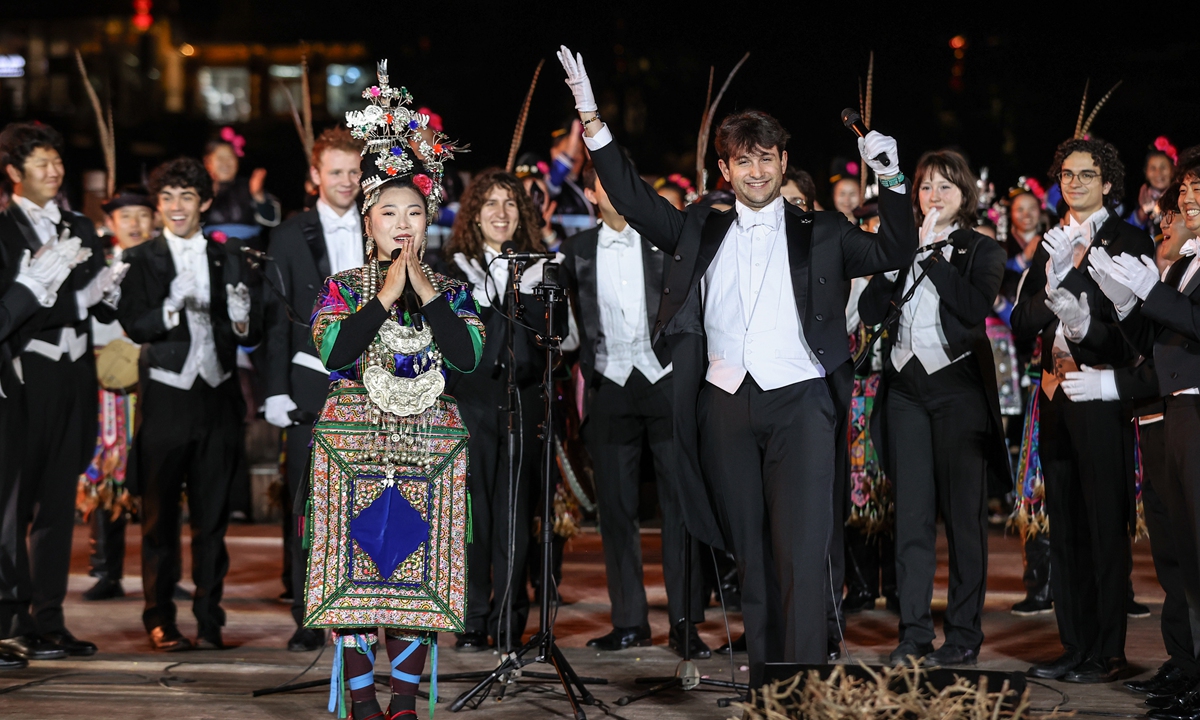
The Yale Whiffenpoofs perform at the National Centre for the Performing Arts in Beijing on August 12, 2026. Photo: Li Hao/GTThe concert appeared to be over. Yet neither the singers nor the audience seemed ready to let the night end.
On the evening of August 12 at the National Centre for the Performing Arts in Beijing, the Yale Whiffenpoofs finished their scheduled program before returning to the stage for an encore featuring three Chinese songs: the traditional folk tune "Jasmine Flower," the popular hit "The Brightest Star in the Night Sky" and "Let the World Be Filled with Love."
The singers' carefully rehearsed Chinese was soon joined by voices from the auditorium, turning the encore into a chorus shared across the hall.
The moment brought a longer journey into focus. More than four decades after the Whiffenpoofs first toured China in 1985, the current ensemble spent 15 days traveling to nine destinations across the country in March and April before returning to Beijing in August.
Founded in 1909, the Whiffenpoofs are the oldest collegiate a cappella group in the US. Each year, 14 Yale students are selected for the student-run ensemble, which performs more than 200 concerts across six continents.
Over its 117-year history, the group has counted among its members songwriter and composer Cole Porter, former US senator Prescott Bush and actor Ron Livingston.
Most of the current members are not music majors. They study subjects ranging from history and global affairs to chemistry, biomedical engineering, neuroscience and economics, but set aside a year to place music at the center of their lives.
Across concert halls, university campuses and villages, the young singers encountered people and places that could not be reduced to distant headlines or images on a screen.
Their journey was not simply about mastering unfamiliar lyrics. It was also about what could begin once the singing stopped and conversation began.
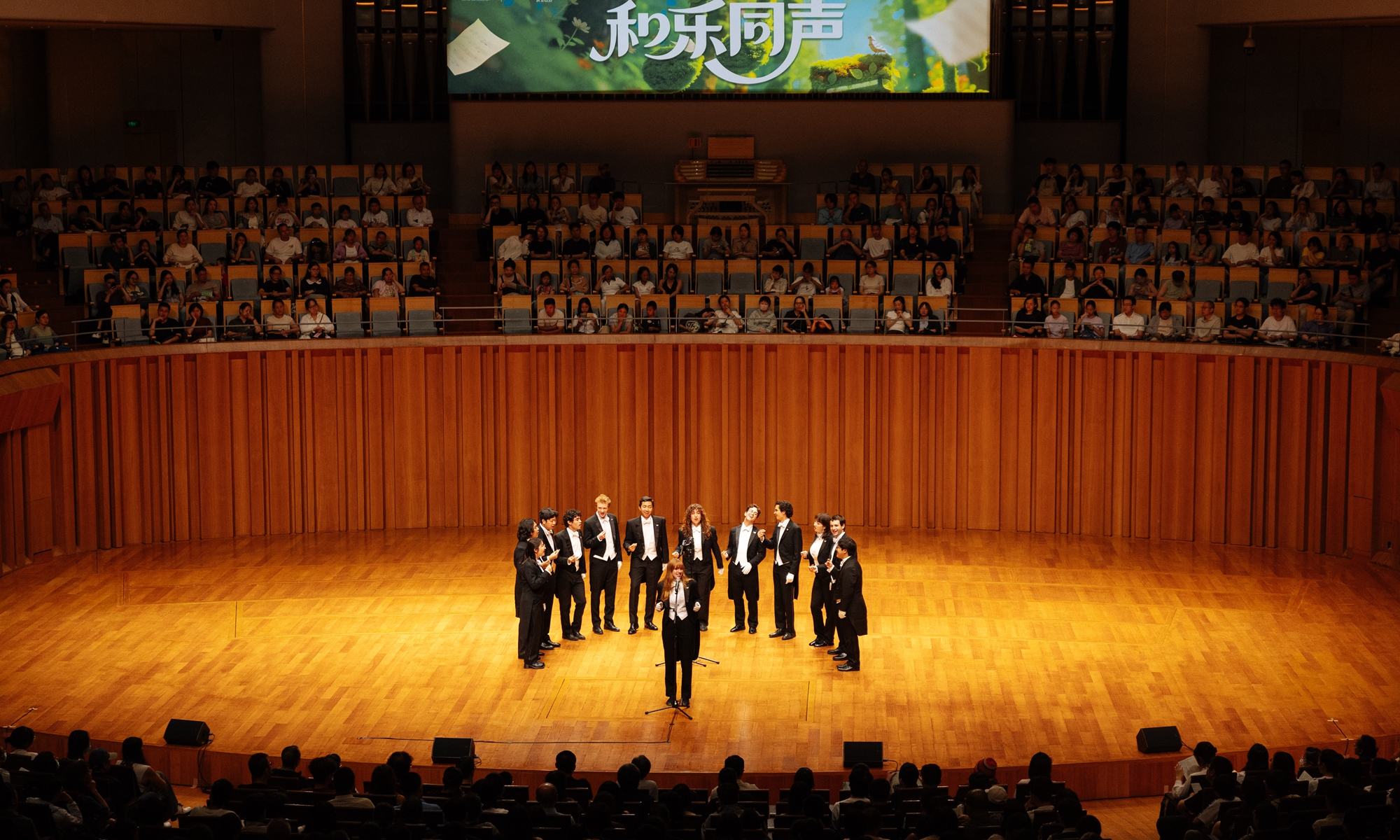
The Yale Whiffenpoofs perform at the National Centre for the Performing Arts in Beijing on August 12, 2026. Photo: Li Hao/GT
Shared voicesFor Zhang Yixiao, a 22-year-old Beijing native and the group's assistant musical director, one of those melodies carried a particularly personal memory.
Long before he left for Yale University, Zhang sang with the renowned Beijing Philharmonic Choir, founded by conductor Yang Hongnian. He also performed on the same stage during the annual August Chorus Festival.
"The Brightest Star in the Night Sky" was also a song he had grown up with - one that used to play over the loudspeakers while he and his classmates ran laps in middle school. Years later, he taught it to his American teammates and listened as a Beijing audience sang it back to them.
During the China tour, Zhang, who studies global affairs and economics at Yale, also helped his fellow singers cross a less familiar musical boundary. He selected the Chinese songs, explained their meanings and helped the group with pronunciation. The pieces were arranged by members of the ensemble.
He chose songs from different ends of China's musical landscape: "The Brightest Star in the Night Sky" represented a contemporary memory shared by many young Chinese people; "Jasmine Flower" introduced the group to one of the country's most recognizable traditional melodies.
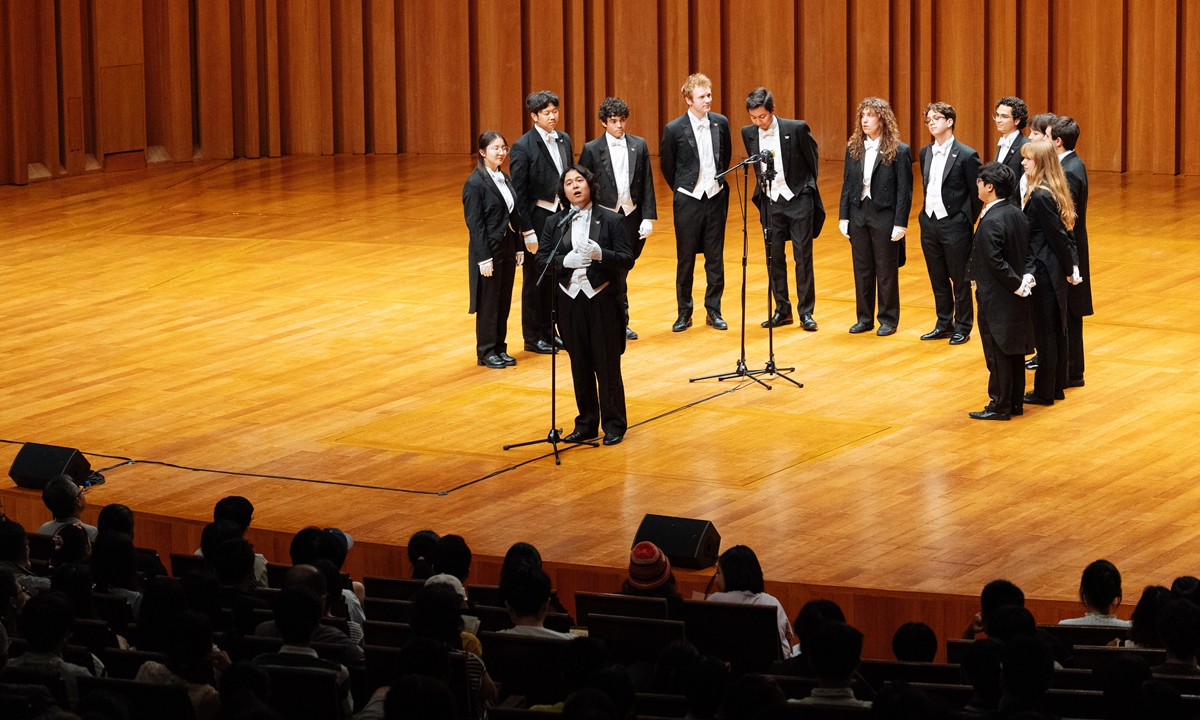
The Yale Whiffenpoofs perform at the National Centre for the Performing Arts in Beijing on August 12, 2026. Photo: Li Hao/GT
The work was shared by Eunice Oh, the first woman to serve as musical director in the Whiffenpoofs' history. Together, Oh and Zhang led the group through the process of learning the Chinese repertoire.
Hearing the Beijing audience join in gave that work an immediate payoff. "I really loved being able to sing with the audience," Oh told the Global Times. "It was very heartwarming."
Getting there required some work. "I think it's a little bit difficult, just because it's so different from the sounds we make in English," Oh said. Zhang taught the group not only how to pronounce the words but also what the lyrics meant. The process was nevertheless enjoyable, and "definitely worth the effort we put in," she said.
The response was often immediate. At performances across China, those in the audience who knew the words sang along.
"That was when we could feel the power of music transcending language divides," Zhang said. "No matter where we come from, or whether an ocean lies between us, we share a love of music and a love of life."
Other songs opened different conversations. After the group performed "Midnight Train to Georgia," a few people in the audience approached the singers to ask about a dance sequence in the number. The answer led to discussions of Hollywood and American popular culture. Chinese students, in turn, introduced Peking Opera and traditional instruments including the
pipa,
suona and
guzheng.
The songs gave the two groups something concrete to ask each other about.
Echoes across timeThe Whiffenpoofs' China tour this year was built around a piece of the group's own history.
In 1985, at the invitation of the Chinese People's Association for Friendship with Foreign Countries, the Whiffenpoofs made their first trip to China, performing in Beijing, Nanjing and Guangzhou. Parts of the journey were later preserved in the short documentary
Perfect Harmony: The Whiffenpoofs in China.
They arrived in a country still in the early years of reform and opening-up, when even Coca-Cola was a novelty for many Chinese people, and so was the sight of a group of young American visitors.
The "Whiffs" climbed the Great Wall, spoke with Chinese university students, stopped to watch elderly residents practice tai chi, and sang in the open air at the Temple of Heaven.
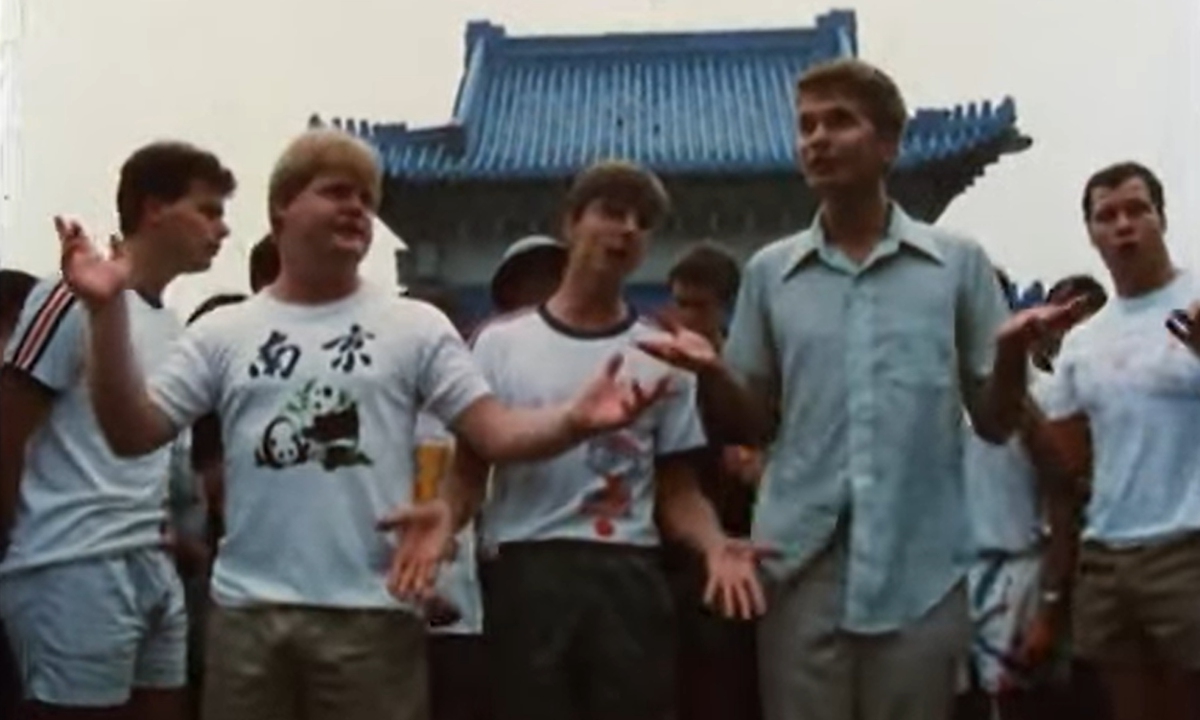
The Yale Whiffenpoofs perform in China during their 1985 tour. Photo: Screenshot from the documentary
Perfect Harmony: The Whiffenpoofs in ChinaFour decades later, the Temple of Heaven offered the clearest point of return. The singers stood where their predecessors had performed and sang the same song.
"Just as they had sung at the Temple of Heaven, we sang the same song again in the same place," Zhang said.
The reprise linked the two tours, while the rest of the itinerary showed how much more geographically varied the 2026 journey had become.
The new route extended well beyond major cities. In Zhaoxing Dong Village, Southwest China's Guizhou Province, the group performed with local choirs and listened to the Grand song of the Dong ethnic group, a polyphonic tradition performed without a conductor or instrumental accompaniment. The encounter brought together two distinct a cappella traditions.
Passed down orally within Dong communities, the tradition includes imitative songs that reproduce sounds from the natural world, particularly animal calls. It was inscribed on UNESCO's Representative List of the Intangible Cultural Heritage of Humanity in 2009.
Members of the Yale Whiffenpoofs perform with local singers in Zhaoxing Dong Village, Southwest China's Guizhou Province, on March 23, 2026. Photo: ICMembers also learned to play the Dong pipa, tried batik dyeing and joined residents in pounding glutinous rice, according to the Xinhua News Agency.
Zhang said stops such as Zhaoxing and Zhangjiajie gave his fellow singers a view of "a more diverse and different China."
The contrast between major cities and smaller villages became one of Oh's strongest impressions. "Being able to see the diversity that China has to offer, from these big cities to smaller villages, was incredible," Oh said. "I think it is a place unlike any other place I've been in my life and in my travels," she said.
Beyond the stageExchanges with Chinese students ran through both visits. During the March tour and the group's return to Beijing in August, the Whiffenpoofs visited universities, performed with student choirs and talked with peers close to their own age.
"Although we grew up in very different countries, the fact that we can all stand together and sing a song really brought us together," Oh said. "Music is a way to connect people."
Yet the connection did not end with the performance. Conversations with Chinese students gave the visitors access to the ordinary details of lives that rarely appear in international headlines.
"It's a very cool way to understand how people similar to our age have been experiencing their lives, and to share that with one another, and just learn about their culture and traditions and background in a way that is very different from just looking on social media or looking in a history textbook," Oh said.
Chinese students described the exchange in similarly concrete terms. Pan Lutong, a Nankai University student who performed with the Whiffenpoofs, said it was her first opportunity to work closely with a choir from an overseas university.
Outside rehearsals, the students also visited Tianjin's Ancient Culture Street together.
"This kind of exchange between students gave us a valuable friendship," Pan said.
The encounters continued in Beijing. On August 10, shortly after arriving in the city, the Whiffenpoofs rehearsed "The Brightest Star in the Night Sky" with the Beijing Wuzi University Riparian Choir.
"Through music, students from China and the US formed friendships and gained new cultural perspectives and musical experiences," a representative of the Riparian Choir told the Global Times.
The August 12 concert was the final performance of the group's year together. Two weeks later, Zhang said, the members would return to Yale, resume their studies and leave the road to another generation of Whiffenpoofs.
That work may continue after the tour. "This experience has shown me the importance and meaning of cultural exchange and face-to-face interaction," Zhang said. "I hope to continue working in this field in the future."
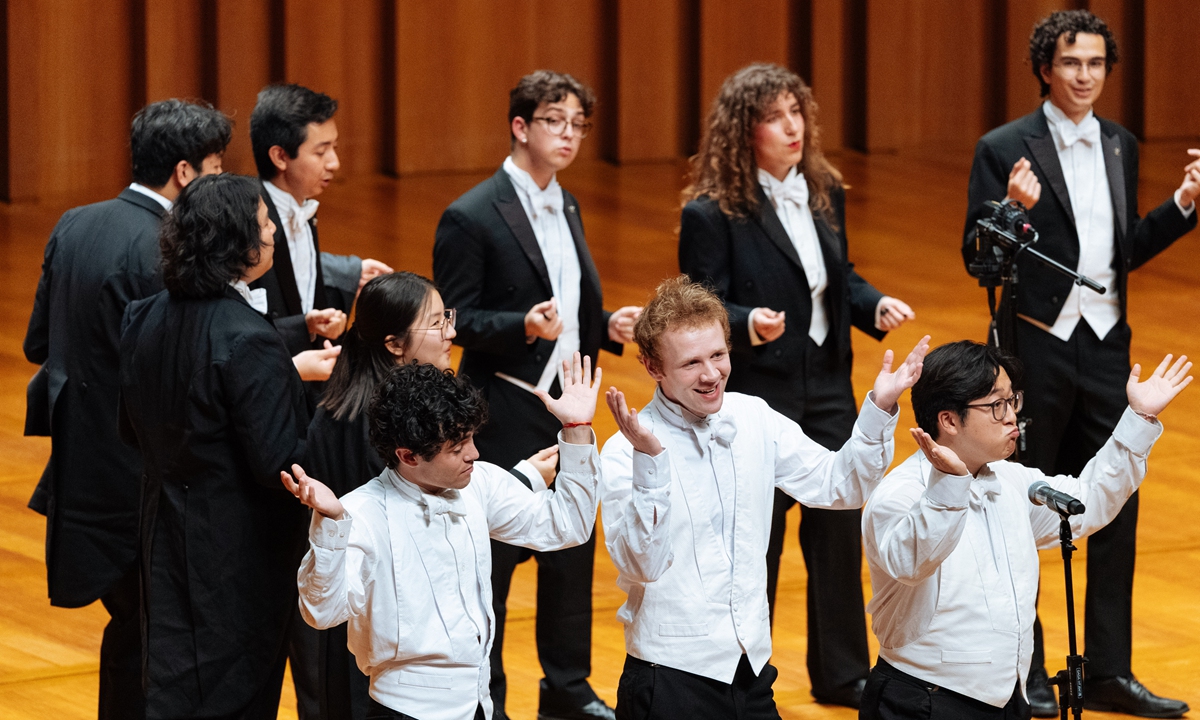
The Yale Whiffenpoofs perform at the National Centre for the Performing Arts in Beijing on August 12, 2026. Photo: Li Hao/GT
。目前,小米家居厨房区,已推出了一批智能化厨房五金产品,如电饭煲、净水器、电饭煲、电饭煲、电饭煲等,小米合约青年厨房的雄心突显。我们收到了米佳高压锅的这一产品。现在我们给你带来一张开箱照片。

二 | 像米佳的其他五金产品一样,颜色仍然是该产品最大的亮点。白色、简约、智能化已成为米佳的“家庭”设计。米佳高压锅有许多卖点,如高色值、电磁调压、韩国铸铝锁紧结构、大型OLED屏、日本大金PFA粉末涂料等,将于1月16日上线销售,售价599元。富士米佳电饭煲,包括电饭煲1、电饭煲1、粥煲1、量杯1、电源线1、说明书1米佳电饭煲采用电磁调压阀,新型电磁吸压结构,可自由控制不同级别间的泄压效率0千帕至70千帕的压力值,以达到灵活可调的压力,从而达到无限的压力调节。米佳高压锅采用顶装式控制面板,下沉式解锁。可轻松浏览整个操作界面,不需弯腰。米家高压锅在控制界面上增加1.32英寸OLED触摸屏,实时显示烹饪时间、模式、状态、需要时的提醒等关键数据。

三 | 米佳高压锅的额定压力为1.7大气压,可使锅体温度达到114℃左右,同时采用自动间歇变压方案,烹饪过程中无需手动泄压。米家高压锅上面板中间开孔功能设计。在保温阶段,可随时按中途上料键进行自动减压,并可在开口处加料。米佳高压锅采用韩国铸铝锁紧结构,仅在高端高压锅中可用。顶盖与内衬锁为一体,承压件少,牢固可靠。

四 | 顶盖采用整体压铸合金锁环,厚度3.8毫米,能承受6倍的最大大气压力(正常烹饪时的最大压力为大气压力的1.7倍),并在压力阀外设计了特殊的泄压盖板,使泄压压力达到然后避免烫伤。

五 | 米佳高压锅的内胆是由3.5毫米多层铝合金制成的。内胆涂有日本大金粉,用于食品接触安全。耐磨性和非粘性结合在一起。在智能功能方面,米家高压锅支持APP智能联动。连接到网络后,“WiFi智能电压锅”通过程序控制电磁压力控制阀的间歇微泄,具有上下温度传感器,并通过app精确控制烹饪压力的变化。还可以通过设备或应用设置用餐时间,应用终端可以远程操作,不受地理位置的影响,实现24小时智能预订。更多奖励:。
Current article:http://sae.ganweilingmukuai.shop/fr6u05/20260826/4047.html
Published on:04:31:45